To mark Louis Riel Day, the BC Métis Federation (BCMF) is pleased to share a new article by BCMF Director of Research Joe Desjarlais, M.A., a descendant of Stanislas Desjarlais.
How one family’s history reveals generations of Métis self-determination.
Every November 16, governments honour Louis Riel with speeches, news releases and photos alongside Métis leaders. Politicians praise him as a Canadian hero who fought for equality and helped build a more inclusive country. In 2025, Prime Minister Mark Carney said Riel “helped unite our young nation.” But Riel’s vision went further. He believed Métis people had the right to govern themselves, protect their lands and shape their relationship with Canada.
Recovering my own Desjarlais family history is helping me understand where that vision came from. Through connections with the Falcon, Sayer, McKay, Arcand and Bremner families, I am discovering generations of Métis people who built communities, formed alliances and stood up for their rights. Their story is about more than resistance and colonial hardship. Riel’s vision grew from generations of Métis families who were already working to determine their own future.
Finding our own Métis voices
Living in British Columbia, I have struggled to find our Métis families in Canada’s history. For generations, our stories have often been told through Canada’s eyes rather than our own. Even when Métis people are remembered, we are often portrayed as heroes of resistance or victims of colonialism. Both stories matter, but neither tells the whole story of who our people were or what they hoped to achieve.
As Métis scholar and extended family relative Janice Acoose has argued, we need to understand and define ourselves through our own family histories, rather than allow others to define us.
My own research is revealing a much longer history of Métis people building communities, maintaining relationships and exercising their own leadership.
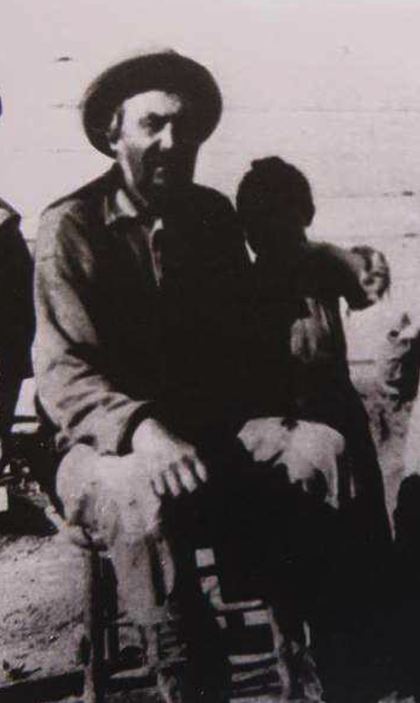
Stanislas Desjarlais, the author’s great-grandfather. Photo: family collection.
A family history of self-determination
My great-grandfather, Stanislas Desjarlais, had family ties to several people involved in the 1885 Resistance. As I trace those relationships, I am discovering a much longer history of Métis families standing up for their rights.
I descend from Stanislas and his second wife, Mary Jane Prosser. His first marriage was to Virginie McKay, whose family connections also became part of the wider Desjarlais family story. The McKay and Arcand relatives discussed here are connected through that earlier marriage. These distinctions matter, but so do the relationships themselves. Métis history is about family relationships, marriages, communities and networks, not just direct ancestral lines.
Stanislas’s brother Antoine married Marie Falcon. Her father, Jean-Baptiste Falcon, was a Métis buffalo-hunt leader associated with the Battle of Grand Coteau in 1851. Genealogical research also suggests Marie was a granddaughter of Pierre Falcon, whose famous song remembered the Battle of Seven Oaks in 1816.
Another brother, Bernard Desjarlais, married Rose Sayer, daughter of Guillaume Sayer. Guillaume’s trial in 1849 challenged the Hudson’s Bay Company’s control over the fur trade.
These family connections continued through the Red River Resistance of 1869–70, when Riel helped establish a provisional government and negotiate Manitoba’s entry into Confederation. Jean-Baptiste Arcand, who married Nancy McKay, the sister of Stanislas’s first wife, Virginie, was reportedly among the men guarding John Christian Schultz’s captured store during that Resistance.
A scrip affidavit from 1875 names Stanislas and his brother Antoine among the children claiming their late mother’s Métis land entitlement. In 1883, Stanislas’s brother-in-law, Alexandre Bremner, signed a petition seeking surveys and secure title for Métis river lots at St. Louis.
These records show that defending Métis rights meant more than taking up arms. It also meant making land claims, signing petitions, challenging decisions that threatened their communities, and trying to navigate a hostile scrip system that made it difficult for Métis families to secure their land rights.
These records are helping me see my ancestors and extended family as free people who built communities, hunted, traded, formed alliances and stood up for their rights. They were not simply reacting to Canada’s expansion. They were working to protect their way of life and shape their own future.
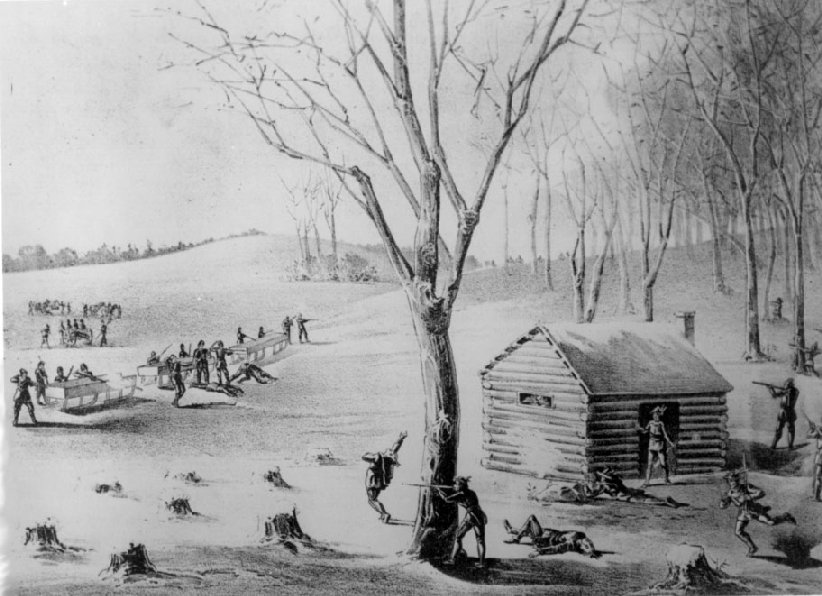
Battle of Duck Lake (1885). Historical illustration. Source: Wikimedia Commons. Public domain.
Duck Lake and the 1885 Resistance
On March 26, 1885, government forces fought Métis and Cree fighters near Duck Lake, in present-day Saskatchewan. Gabriel Dumont led the Métis forces in the opening battle of the armed North-West Resistance.
Several members of Stanislas’s extended family were involved in the Resistance.
Guillaume McKay, identified in genealogical accounts as the brother of Stanislas’s first wife, Virginie, fought in Captain Baptiste Primeau’s company. Members of the Arcand family also took part in the Resistance, along with Stanislas’s uncle André Desjarlais, his cousin Paul Desjarlais and his brother-in-law Alexandre Bremner.
The fighting came at a cost. Joseph Arcand was imprisoned, while another relative by marriage, Joseph Vermette, was killed at Fish Creek.
Not everything I am discovering is easy to read. In his later account of the fighting at Duck Lake, Gabriel Dumont described the death of a wounded opponent and attributed it to Guillaume McKay.
I do not want to leave out difficult stories simply because they are troubling. Remembering our ancestors and kin does not mean turning them into perfect heroes. Their history deserves to be told, including the difficult parts.
“It found us at peace”
Pierre Falcon began his song about Seven Oaks with an invitation, in translation, to hear a “song of truth.” He went on to describe people coming to threaten “our country.”
Years later, looking back on Canada’s arrival at Red River in 1869, Louis Riel wrote:
“When the Government of Canada presented itself at our doors it found us at peace.”
These words remind us that Métis people already had communities, leaders, laws and ways of governing themselves before Canada arrived. Riel’s political vision grew from this history. He helped establish a government and negotiate with Canada because Métis people had their own lands, rights and political future to protect.
In his book The Audacity of His Enterprise, historian Max Hamon reminds us that Riel was more than a rebel. Riel wanted to help shape Confederation, not simply resist it. Hamon argues that Riel’s execution in 1885 reflected a failure of Confederation itself.
Riel imagined a different kind of Canada, where Métis people could determine their own future while living alongside other peoples with mutual respect. His vision was not simply about gaining equality within Canada. It was about Métis people helping shape the country through negotiation, partnership and recognition of their right to govern themselves.
There is no Riel without Riel’s people
Riel’s vision did not grow in isolation. It grew from generations of Métis families and communities who were already speaking and acting for themselves. Their strength came from the relationships they built with one another and the land. Even through tremendous change and hardship, those connections helped families adapt, support one another and carry their communities forward.
I see that same spirit in the work being done today at the BC Métis Federation to reconnect with communities and recover our family histories.
I have been inspired by BC Métis Federation President Keith Henry’s stories about his family at Batoche. Through our community-based research, Karen Prouse has helped us understand northern B.C. Métis families and how scrip affected her ancestors. Cindy Wilgosh and Rosanne Forget are helping people uncover their own rich, and sometimes complicated, family histories in the Pacific Northwest.
I am not sharing these stories because I believe my family was special. I want to understand how my ancestors lived, what mattered to them and the choices they made for their families and communities. I also hope the next generation of Métis people will discover their own histories and reconnect with the family networks that have brought our people together for generations.
Remembering Riel should mean more than celebrating his place in Canadian history. It should mean recognizing the Métis people whose lands, rights and political future he fought to protect.
There is no Riel without Riel’s people. Their history is one of communities working to determine their own future, and that story continues today.
Joe Desjarlais, M.A., is Director of Research at the BC Métis Federation and a descendant of Stanislas Desjarlais. He can be reached at J.Desjarlais@BCMetis.com.


